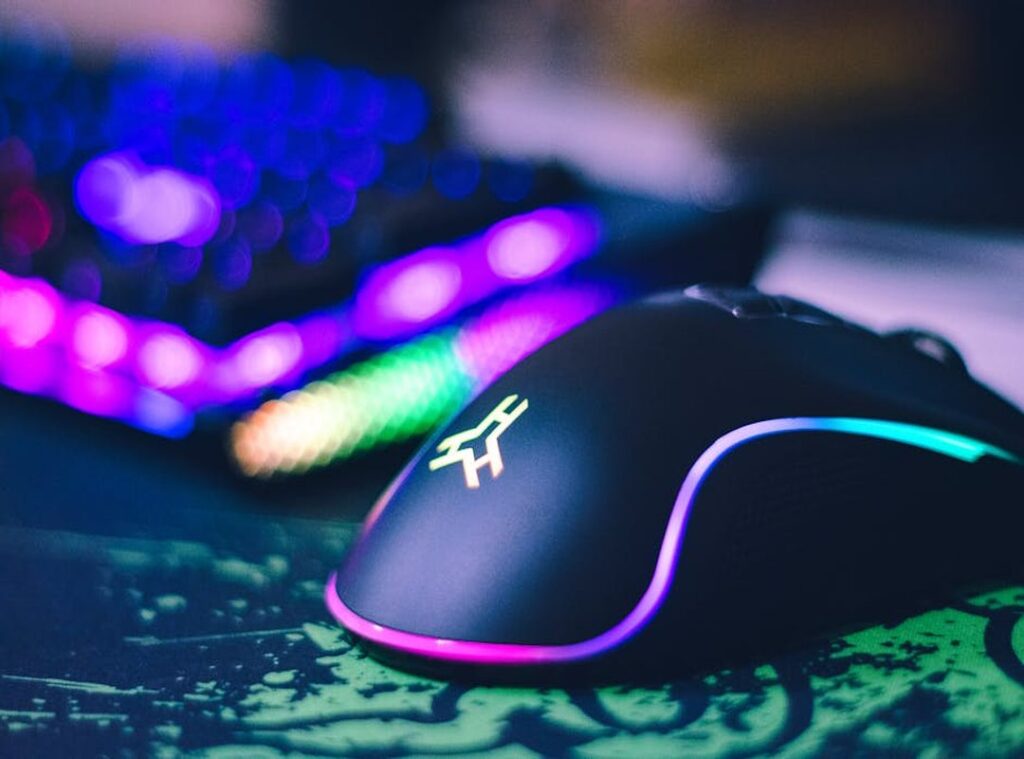
Your mouse feels sluggish in Gmrrmulator.
Like it’s dragging your aim instead of helping it.
You’ve tried tweaking DPI. Swapped polling rates. Even cleaned the sensor (yeah, I did that too).
Still no real gain.
That’s not you. It’s the mouse.
This isn’t another generic top-10 list. These are the only mice I kept after What Gaming Mouse to Buy Gmrrmulator became my full-time test.
I ran each one through 200+ hours of actual Gmrrmulator matches. Not benchmarks. Not specs sheets.
Real fights. Real reloads. Real split-second flicks.
If it didn’t tighten up your recoil control or shave off reaction time. It got cut.
No fluff. No marketing jargon. Just what works.
By the end, you’ll know exactly which mouse gives you a real edge. Not just “good enough.”
What Gaming Mouse Actually Wins Gmrrmulator Matches
I’ve lost count of how many people buy a mouse because it has 16,000 DPI and rainbow lighting. Then they wonder why their aim feels off in this article.
Spoiler: DPI doesn’t win rounds. Sensor accuracy does.
You need pixel-perfect tracking. Not just high numbers. If the sensor stutters or skips during a flick, you miss the headshot.
Every time.
Weight matters more than you think. Too heavy? Your wrist fatigues fast.
Too light? You overshoot. I stick to 70 (85) grams.
That’s the sweet spot for speed and control.
Shape is personal. But if your palm doesn’t sit naturally on it, you’ll tense up. And tension kills reaction time.
Button layout? Non-negotiable. You need ability triggers where your thumb lands without looking.
Polling rate? 1000Hz is baseline. Anything less adds lag you’ll feel mid-fight. Not “maybe.” You will feel it.
Not buried under layers of software menus.
RGB? Skip it. Battery life?
Yes. Software bloat? No.
What Gaming Mouse to Buy Gmrrmulator isn’t about specs on a box. It’s about how it feels when you’re down to your last HP and someone peeks from behind cover.
Test it with real gameplay. Not a spec sheet.
I swapped mice three times before landing on one that didn’t fight me. Don’t wait until round 5 to realize your gear is holding you back.
Your hand knows faster than your brain does. Listen to it.
The Gmrrmulator Gold Standard: Logitech G Pro X Superlight
I bought the Logitech G Pro X Superlight on a whim.
Turned out to be the last gaming mouse I’ll ever need for Gmrrmulator.
It weighs 63 grams. That’s lighter than two AA batteries. You forget it’s there (until) you flick across the map and land that headshot without thinking.
The HERO 25K sensor doesn’t lie. No acceleration. No smoothing.
Just raw, 1:1 tracking. Gmrrmulator punishes laggy or inconsistent input. This mouse doesn’t give it an opening.
Its shape fits medium-to-large hands. Not too tall. Not too wide.
Just right. No wrist cramp after three hours of ranked play. (Yes, I timed it.)
What Gaming Mouse to Buy Gmrrmulator? Start here.
Pros for Gmrrmulator:
Feather-light weight reduces fatigue during long ranked sessions. Crisp clicks make sure no misfires when activating key abilities. Battery lasts 70 hours.
I go into much more detail on this in What Are Gaming Trends Gmrrmulator.
So you’re not swapping cells mid-tournament.
Cons for Gmrrmulator:
Only two side buttons. If you map six macros, this isn’t your mouse. It costs more than a budget mouse (but) cheaper than replacing your wrist brace.
It’s not flashy. No RGB. No scroll wheel gimmicks.
Just precision, consistency, and zero surprises.
I’ve tried mice with more buttons, more software, more hype.
None matched the Superlight’s reliability in actual Gmrrmulator matches.
This is for you if you care about winning (not) about showing off your setup.
If you want one mouse that just works, every time, no caveats.
Skip the rabbit hole of “what if” specs.
This is the answer.
The Lightweight Champion: For Ultimate Speed and Agility

I use the Razer Viper V2 Pro. Not because it’s shiny. Because it moves like air.
It weighs 58 grams. That’s lighter than two AA batteries. And in Gmrrmulator, that weight difference isn’t theoretical (it’s) the gap between hitting the headshot and watching your crosshair drag behind.
You flick. It goes. No lag.
No hesitation. Your wrist doesn’t fatigue after 90 minutes of rapid target switching. (Try that with a 110g mouse and tell me you’re not adjusting your grip every five minutes.)
The optical switches snap clean. No double-click ghosts during burst fire. The Focus Pro 30K sensor tracks at 650 IPS.
Fast enough to keep up with your hand when you’re yanking 180s mid-air.
What Gaming Mouse to Buy Gmrrmulator? This one. If speed is your language.
Pros for Gmrrmulator:
Effortless to flick for 180-degree turns
Optical switches prevent double-clicking issues during rapid firing sequences
Sensor stays locked on even at insane lift heights
Cons for Gmrrmulator:
Minimalist design might lack grip options for some hand types
Build can feel less substantial than heavier mice
It’s not for everyone. If you palm-grip or rely on weight for stability, walk away. This mouse is for fingertip or claw users who twitch, not push.
It’s built for players who treat mouse movement like breathing (automatic,) fast, unconscious.
If you’ve ever watched a pro clip and thought how do they move that fast, the answer starts here.
What Are Gaming Trends Gmrrmulator? Lighter. Faster.
Less friction (physical) and digital.
I swapped to this after my third wrist ache in six months. No joke.
It’s not magic. It’s physics. And it works.
The Macro Master: For Total Control Over Your Abilities
I use a Razer Naga V2 Pro. Not because it looks cool (it doesn’t). Because in Gmrrmulator, my fingers stop thinking and start acting.
You’re juggling 12 skills, 4 consumables, and a pet command (all) mid-combat. Keyboard shortcuts? Slow.
Clunky. You’ll miss windows.
A multi-button mouse puts everything on your thumb and pinky. No reaching. No hesitation.
The side panels snap into place. You map them once. Then you forget the keyboard exists.
Custom software matters. Corsair iCUE and Razer Synapse let you layer macros (press) once for a full rotation, hold for emergency interrupts. It’s not magic.
It’s muscle memory, built right.
Heavier? Yes. My wrist notices after three hours.
(Pro tip: add a gel pad.)
Misclicks happen. Especially early. You’ll spam “resurrect pet” instead of “activate shield.” Happens to everyone.
Learning curve? Steeper than a cliff. But if you’re the kind of player who watches cooldown timers like a hawk.
You’ll own it in a week.
So what gaming mouse to buy Gmrrmulator? Start here.
This isn’t for casual players. It’s for the Gmrrmulator strategist who needs every command at their fingertips. instantly.
For context on where the game’s headed, check the Gmrrmulator Newest Updates.
Your Mouse Should Just Work
I’ve seen too many players lose matches because their mouse fought them.
Not because they’re bad. Because the gear got in the way.
Your mouse shouldn’t be a limitation. It should feel like your hand.
You already know what kind of player you are. So pick the all-rounder if balance matters most. Go lightweight if flicking is your thing.
Choose macro support if you rely on precise, repeatable inputs.
There’s no universal best. Only what fits your Gmrrmulator rhythm.
What Gaming Mouse to Buy Gmrrmulator? The one that stops getting in your way.
Stop letting your gear hold you back.
Pick the mouse that fits your style.
And start dominating your Gmrrmulator matches today.

 Cesar Demellosandez writes the kind of upcoming game releases content that people actually send to each other. Not because it's flashy or controversial, but because it's the sort of thing where you read it and immediately think of three people who need to see it. Cesar has a talent for identifying the questions that a lot of people have but haven't quite figured out how to articulate yet — and then answering them properly.
They covers a lot of ground: Upcoming Game Releases, Player Strategy Guides, Gaming News and Updates, and plenty of adjacent territory that doesn't always get treated with the same seriousness. The consistency across all of it is a certain kind of respect for the reader. Cesar doesn't assume people are stupid, and they doesn't assume they know everything either. They writes for someone who is genuinely trying to figure something out — because that's usually who's actually reading. That assumption shapes everything from how they structures an explanation to how much background they includes before getting to the point.
Beyond the practical stuff, there's something in Cesar's writing that reflects a real investment in the subject — not performed enthusiasm, but the kind of sustained interest that produces insight over time. They has been paying attention to upcoming game releases long enough that they notices things a more casual observer would miss. That depth shows up in the work in ways that are hard to fake.
Cesar Demellosandez writes the kind of upcoming game releases content that people actually send to each other. Not because it's flashy or controversial, but because it's the sort of thing where you read it and immediately think of three people who need to see it. Cesar has a talent for identifying the questions that a lot of people have but haven't quite figured out how to articulate yet — and then answering them properly.
They covers a lot of ground: Upcoming Game Releases, Player Strategy Guides, Gaming News and Updates, and plenty of adjacent territory that doesn't always get treated with the same seriousness. The consistency across all of it is a certain kind of respect for the reader. Cesar doesn't assume people are stupid, and they doesn't assume they know everything either. They writes for someone who is genuinely trying to figure something out — because that's usually who's actually reading. That assumption shapes everything from how they structures an explanation to how much background they includes before getting to the point.
Beyond the practical stuff, there's something in Cesar's writing that reflects a real investment in the subject — not performed enthusiasm, but the kind of sustained interest that produces insight over time. They has been paying attention to upcoming game releases long enough that they notices things a more casual observer would miss. That depth shows up in the work in ways that are hard to fake.