I’ve seen too many people zone out during online courses because they’re just clicking through slides and watching videos.
You’re probably searching for a better way to learn. Something that actually sticks and builds skills you can use.
That’s where online event pblgamevent comes in.
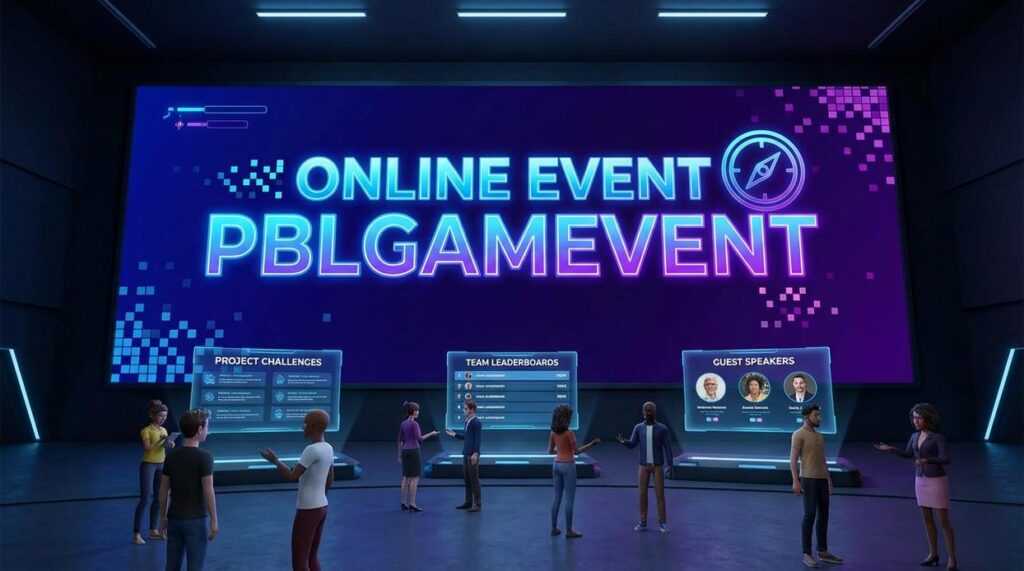
These aren’t your typical webinars or passive learning sessions. They combine the best parts of gaming with real project work. You’re solving problems, building things, and competing while you learn.
Here’s the thing: traditional online learning doesn’t work for everyone. It’s often boring and disconnected from real applications.
Online event pblgamevent flips that model. You’re actively engaged the whole time.
I’ve been tracking trends in both educational technology and competitive gaming for years. I’ve watched these events grow from small experiments into serious learning experiences that actually deliver results.
This guide will show you exactly what these events are and why they work so well. You’ll learn how to find the right ones for your goals and what it takes to join or even run your own.
No theory or fluff. Just what you need to know to get started.
Deconstructing the Virtual PBL Game Event: What Is It?
I’ll never forget the first time I joined one of these things.
It was 2019. A friend invited me to what he called a “game jam with actual learning.” I thought he was overselling it. Turns out, I was completely wrong about what I was walking into.
Here’s what a virtual PBL game event actually is.
It’s a structured online event where you and other participants work together to solve a real problem or build something inside a game environment. Not just any game session. A focused challenge with a deadline and a goal.
Let me break down the three parts that make this work.
Project-Based Learning (PBL)
This isn’t about memorizing facts or grinding through tutorials.
You’re given a challenge. You have a set amount of time. You create something real by the end.
That’s it. You learn by actually doing the work.
The Game Engine
Now here’s where it gets interesting. The game isn’t just there for fun (though it is fun).
Points matter. Narratives drive you forward. You manage resources. You work with teammates. All of this pushes you to pick up new skills without feeling like you’re in a classroom.
The Virtual Event Framework
These happen in specific time blocks. Maybe it’s a 48-hour build session. Maybe it’s a week-long design challenge.
The whole thing runs online. Which means you could be teaming up with someone in Tokyo while you’re sitting in your living room in Highland.
Let me give you a real example.
Picture this. Your team gets assigned to design and build a working eco-friendly colony on Mars. You’re using something like Kerbal Space Program or a custom Minecraft server. You have 48 hours.
You need to figure out power sources. Food production. Shelter that can handle radiation. And you need to actually build it in the game so others can see it function.
That’s what I mean by an online event pblgamevent. It’s not theoretical. You’re making decisions and seeing results in real time.
Some people think this is just gaming with extra steps. That if you want to learn, you should take a proper course.
But they’re missing something important.
When I built that Mars colony with my team (we failed spectacularly, by the way), I learned more about systems thinking in two days than I had in months of reading. Because failure had immediate consequences and success felt real.
That’s the difference.
The Core Benefits: Why This Model is a Game-Changer for Education
Let me paint you two pictures.
Picture one: A classroom where students zone out during lectures. They memorize facts for tests and forget them a week later. Participation feels forced.
Picture two: Those same students leaning forward in their seats. They’re strategizing with teammates and solving problems they actually care about. They remember what they learned months later.
What’s the difference?
The second group is learning through games.
Some educators push back on this. They say traditional methods have worked for decades and games are just distractions. Why fix what isn’t broken?
Here’s what that argument misses.
Traditional learning is broken for a lot of students. When 70% of them report feeling disengaged (Gallup Student Poll, 2019), we can’t pretend everything’s fine.
Games don’t replace good teaching. They make it stick.
Engagement That Actually Lasts
I’ve watched students who barely spoke in class become team leaders in game-based learning. The shift happens fast.
Why? Because games tap into something textbooks can’t. They make you want to figure things out.
When you’re racing against the clock in a pblgamevent online event, you’re not thinking about grades. You’re thinking about solutions. And that’s when real learning happens.
Skills You Can’t Get From Lectures
Compare these two scenarios.
A student reads about problem-solving in a textbook versus a student who has to solve actual problems with their team under pressure.
Which one walks away with usable skills?
Game-based models force you to practice critical thinking in real time. You communicate with teammates (or you lose). You adapt when your first strategy fails. You learn to think on your feet.
These aren’t bonus skills anymore. They’re requirements.
Failure Without the Fear
Here’s something traditional education gets wrong.
We punish failure with bad grades. So students play it safe. They memorize answers instead of exploring ideas.
Virtual game environments flip this completely.
You can try wild strategies. If they fail, you restart and try again. No permanent record. No shame. Just learning.
(Turns out kids are way more creative when they’re not terrified of making mistakes.)
Breaking Down Walls
Traditional classrooms are limited by geography and resources. You learn with whoever happens to live near your school.
Virtual game-based learning? You’re collaborating with students across continents. Different perspectives. Different approaches. Different ideas.
That’s not just about accessibility. It’s about preparing students for a world where their coworkers and clients won’t all be from the same town.
The model works because it meets students where they are. Not where we wish they were.
Your Mission Briefing: How to Find and Join an Event

You’re staring at your screen right now wondering where to even start.
I’ve been there. That moment when you want to jump into a competition but every search feels like wandering through a maze with no exit signs.
Here’s what actually works.
Where to Look
Start with Itch.io. The interface feels cluttered at first (like someone dumped every indie project onto one page) but their game jam section is gold. You can filter by upcoming events and see exactly how many people joined last time.
Discord servers are your second stop. Join a few gaming education communities and you’ll hear the buzz about competitions before they even hit the main platforms. People talk. You just need to be in the room.
Check esports hubs too. Not just for the big tournaments but for the smaller learning-focused events that fly under the radar.
Search Terms That Work
Type “educational game jam” into Google. Then try “student game design challenge” or “Minecraft build competition.” If you’re into science and tech stuff, “virtual STEM olympiad” pulls up solid results.
The key? Be specific about what you want to build or learn.
Vetting the Event
Some people say any experience is good experience. Just sign up for everything and see what sticks.
But that’s how you waste weekends on poorly run events that fizzle out halfway through.
Look for clear goals first. Can you picture what success looks like? If the event description rambles for three paragraphs without telling you the actual theme, skip it.
Check the judging criteria. If it’s vague or missing entirely, that’s a red flag.
Scroll through their community channels. Are people actually talking? Is the organizer responding to questions? A silent Discord server two weeks before an online event pblgamevent tells you everything you need to know.
Before You Start
Read the rules twice. I know it’s boring but you don’t want to spend 48 hours on something that gets disqualified over a technicality.
Test your setup. Click record on your screen capture software. Launch your game engine. Make sure your mic doesn’t sound like you’re broadcasting from inside a tin can.
If teams are involved, start networking early. The best collaborators get snagged fast. Jump into those community channels and introduce yourself before the hosted event pblgamevent kicks off.
Real-World Examples & Future Trends
I’ll never forget the first time I saw a team pull off a complete game in 48 hours.
It was at a Global Game Jam event. Three college kids and a high school sophomore who barely knew each other. They started Friday night with nothing but an idea about a puzzle game where gravity flipped every ten seconds.
By Sunday afternoon they had something playable. Buggy as hell (the main character kept falling through floors) but it WORKED.
That’s what these events do. They force you to ship something real instead of just talking about it.
The Coding Game Jam
Events like the Global Game Jam aren’t just for fun. You learn rapid prototyping under pressure. You figure out which features actually matter and which ones you can cut. And you discover pretty fast if you can work with strangers when the clock is ticking.
Thousands of teams participate every year. Most games never see the light of day after the weekend ends. But the skills? Those stick around.
The Corporate Sim Challenge
Here’s where it gets interesting for people outside gaming.
Companies now run custom game events to train employees. I’m talking about simulated cybersecurity attacks where your IT team has to stop a breach before it spreads. Or project management scenarios where you’re juggling budgets and deadlines in a virtual office.
One tech company I know runs quarterly challenges where teams compete to solve fake business crises. The winning team gets bragging rights and usually some insight into how they work under stress.
It beats another PowerPoint presentation about incident response.
The K-12 History Build
A school district in Oregon did something smart last year. They had students recreate the Battle of Gettysburg in a game engine. Not just the battlefield. The whole thing. Supply lines, troop movements, terrain advantages.
Kids had to research primary sources. They had to understand why commanders made certain decisions. And they had to build it all in a way that made sense to someone playing through it.
That’s way more engaging than filling out a worksheet about Civil War dates.
What’s Coming Next
The future of online game event pblgamevent looks different than what we have now.
AI mentors that watch you code and suggest fixes in real time. VR platforms where you can physically walk through the environment you’re building. AR overlays that let you test game mechanics in your actual living room.
Some of this already exists in early forms. But we’re maybe two years away from it becoming standard at major events.
The barrier between “making a game” and “being inside the game you’re making” keeps getting thinner.
And honestly? That’s when things get really wild.
I’ve been covering gaming and esports for years now and I keep seeing the same problem.
Online learning feels dead. Students click through slides and zone out. They don’t retain much and they definitely don’t build real skills.
That’s why I’m excited about what’s happening with virtual project-based learning game events.
These aren’t your typical webinars or courses. They mix real project work with game mechanics to create something that actually keeps you engaged.
You came here to understand how these events work and where to find them. This guide gives you that roadmap.
The online event pblgamevent model flips passive education on its head. You collaborate with others, build actual projects, and develop skills that matter in the real world.
I’ve watched players transform into creators through these experiences. The combination of gaming elements and hands-on learning just works.
Press Start on Your Learning Adventure
You have the information now. You know what these events offer and why they beat traditional online education.
Don’t just bookmark this and move on. Pick one event from the resources in this guide and sign up. Jump in, work with your team, and build something real.
This is how learning should feel. Active, collaborative, and actually useful for your future.
The next event is waiting. Go find it and experience what project-based learning can do when it’s done right. Homepage.