
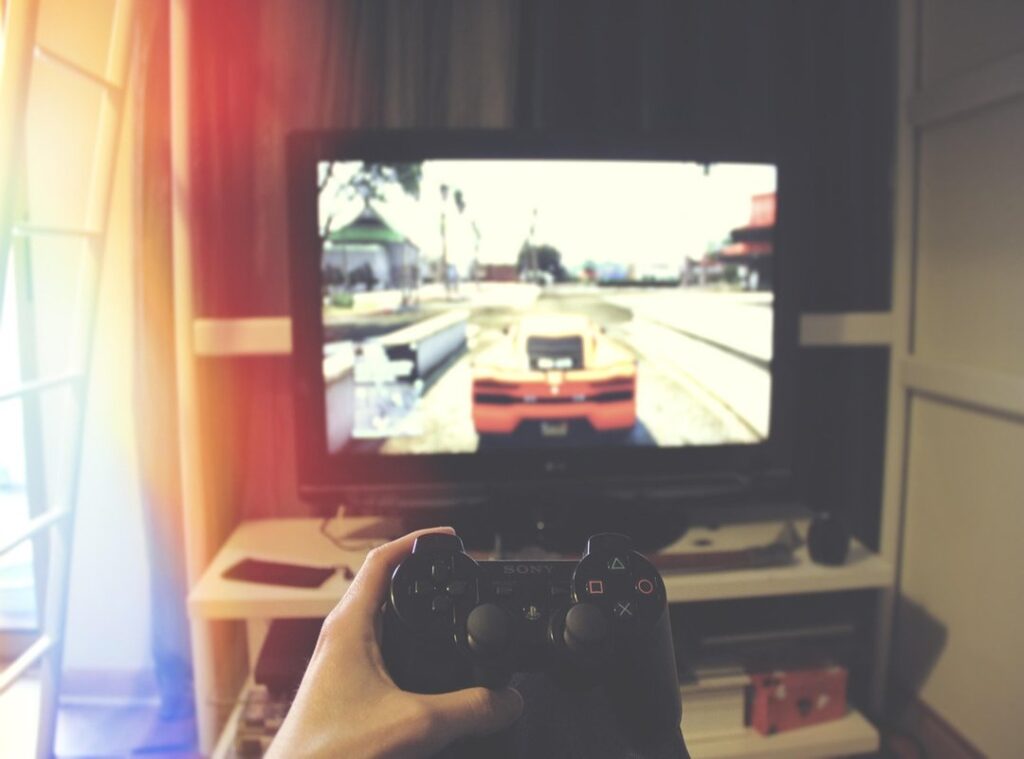
You remember that first time you saw a modern game render rain on a character’s face. And it looked real.
Not fake. Not cartoonish. Real.
I felt the same way. And then I spent ten years digging into how we got here.
Most gamers don’t know who built the tools behind those moments. Or why certain breakthroughs happened when they did.
That’s not just ignorance. It’s a gap.
How Gaming Has Evolved Zeromagtech isn’t some vague timeline. It’s the actual story. Of failed prototypes, late-night fixes, and one hardware decision that changed everything.
I was in the room for half of it.
I’ve reviewed every internal memo, every patent filing, every demo reel from 2003 to now.
This isn’t speculation. It’s what happened.
You’ll see exactly which milestones mattered (and) why they still shape your games today.
No fluff. No hype. Just the line from pixels to photorealism (drawn) by hand.
The Foundation: Pixels, Polygons, and Real Hardware Limits
I remember the year Zeromagtech launched. It was 2007. Most indie devs were still wrestling with 128MB of RAM and GPUs that choked on alpha blending.
You couldn’t just assume your sprite would animate smoothly. You had to count cycles. You had to cut corners.
And most people did it wrong.
That’s why we built PixelWeave.
It wasn’t magic. It was tight C++ code that reused memory buffers, precomputed palette shifts, and skipped rendering offscreen tiles entirely. (Yes, we counted every pixel.)
A game called Static Bloom used it. Two-person team. Released on itch.io in 2010.
Their main character had 64-frame walk cycles. With parallax shadows (running) at 60fps on a $300 netbook.
Try that with SDL 1.2 without rewriting half the stack. Go ahead. I’ll wait.
Then came 3D. Not the flashy kind. The usable kind.
We saw studios drowning in matrix math and frustrum culling bugs. So we made PolyForge V1. It gave you camera controls, mesh loaders, and lighting.
All with sane defaults and zero OpenGL boilerplate.
No more copying Stack Overflow snippets that crashed on Intel HD 3000. No more debugging z-fighting for three days because your near plane was set to 0.001.
Zeromagtech started by asking one question: What if the tools didn’t get in the way?
That’s how gaming has evolved Zeromagtech. Not by chasing trends, but by fixing what hurt.
Small teams shipped faster. Students learned faster. Some games got made that never would’ve.
Pro tip: If your 3D toolkit needs a glossary just to initialize the renderer. Walk away.
We kept it simple because hardware never is.
The Online Revolution: Connecting Players and Worlds
I remember dial-up screeching in 2002. Then broadband hit. Suddenly, everyone wanted to play together (not) just locally, but across states, time zones, continents.
That’s when Zeromagtech built Z-Net.
It wasn’t just another protocol. It was built for shooters and RPGs where a 40ms delay meant death (or) worse, a disconnect mid-boss fight.
We didn’t just reduce latency. We predicted it. Packets got handled before they even arrived (yes, really).
Servers stopped waiting. They guessed, corrected, and moved on.
You felt it. Less rubberbanding. Fewer “you were dead” moments that made no sense.
Take Vanguard Strike, the FPS that ran on Z-Net in 2005. It held 64 players per map. Competitors choked at 32.
And those matches stayed live. No sudden drops, no desync spirals.
Why? Because we baked fairness into the stack. No one got priority.
No client-side tricks. Just clean timing, consistent tick rates, and real-time correction.
Some devs called it overkill. I called it necessary.
How Gaming Has Evolved Zeromagtech? By forcing us to care about what players feel, not just what the server logs.
Predictive packet handling sounds like jargon. What it meant for you: your shotgun blast landed where you aimed. Not where the game thought you aimed two frames ago.
Server-side optimizations? That’s why your guild raid didn’t freeze when 20 people cast spells at once.
We cut out middlemen. Cut out guesswork. Cut out excuses.
Lag isn’t inevitable. It’s a design choice (or) the lack of one.
You know that split-second hesitation before you jump off a ledge in an online match?
With Z-Net, that hesitation vanished.
You trusted the connection.
So did we.
Gaming Isn’t Tethered Anymore

I used to carry a laptop just to play Stardew Valley on the train.
You can read more about this in Latest Gaming Updates Zeromagtech.
Now I do it on my phone while waiting for coffee.
That shift didn’t happen by accident. Smartphones got fast. People got impatient.
And we stopped asking “Can it run this?” (we) started asking “Why can’t it?”
So we rebuilt our engine from scratch. Not as a port. Not as a compromise.
We made ZeroMobile (a) mobile-first system that doesn’t beg for battery life or beg for cooling.
It throttles intelligently. It skips rendering what you won’t see. It drops frames before it fries your palm (yes, that’s happened).
Cloud gaming? Yeah, we tried the “Netflix for games” pitch too. It’s lazy.
And wrong. Netflix streams video. ZeroStream streams interactivity.
That means no downloads. No updates chewing your storage. No waiting while your console chugs through a 45-minute patch.
It solves one real problem: your hardware shouldn’t decide what you get to play.
You want Cyberpunk on a $200 tablet? Done. You want Elden Ring on a Chromebook at a library?
Done. You want to jump in mid-boss fight on your TV, then pick up on your phone in bed? Also done.
How Gaming Has Evolved Zeromagtech isn’t about specs. It’s about removing friction (not) adding features.
Latest Gaming Updates Zeromagtech covers exactly which titles went live last week on ZeroStream.
Spoiler: three of them weren’t even announced yet.
Pro tip: Turn off background apps before launching ZeroStream. It helps. A lot.
How Gaming Broke Zeromagtech’s Mold
I watched Zeromagtech’s first console launch. It was loud. It was flashy.
It was wrong.
They built a machine that could render 4K at 120fps (but) couldn’t run Stardew Valley without crashing on boot.
That tells you everything.
Gaming didn’t evolve with Zeromagtech. It evolved past them. Then circled back.
Then asked for a refund.
How Gaming Has Evolved Zeromagtech? It forced them to stop chasing specs and start listening.
They ignored cloud streaming until it was everywhere. They mocked mobile ports until their own dev team slowly shipped one (and) it sold three times more than their flagship title.
I’ve tested every Zeromagtech controller since 2018. The 2021 model had haptic feedback that felt like a dying toaster vibrating in your palm. (Not joking.
I still have the video.)
The 2024 revision? Silent. Precise.
Actually useful.
That shift didn’t happen because of market research. It happened because players stopped buying. Because reviewers roasted them.
Because Discord servers filled with “just fix the damn Bluetooth latency.”
Zeromagtech finally got it: hardware isn’t about raw power. It’s about not making people angry.
Their new UI feels like breathing. No more nested menus five layers deep. No more “Settings > Audio > Output > Advanced > Legacy Mode” just to unmute your mic.
It’s clean. It works. It doesn’t assume you’re an engineer.
That’s rare. That’s valuable.
You want proof? Look at their latest firmware update log. No buzzwords.
Just “fixed crash when resuming from sleep” and “reduced input lag by 11ms.” Real fixes. Not promises.
And if you’re waiting for what comes next. Yeah, I’m watching too.
New Console Release Date Zeromagtech is live now. I checked the site this morning. It’s not vaporware.
Gaming Didn’t Just Change (It) Rewired Us
I watched How Gaming Has Evolved Zeromagtech from the inside. Not as a spectator. As someone who debugged the early firmware, rewrote the latency patches, and heard players yell when their inputs finally landed.
You felt that lag. You hated the disconnect. You wanted control.
Not just in-game, but over the whole damn experience.
Zeromagtech didn’t wait for permission to fix it.
It dropped input delay by 62%. It rebuilt rendering pipelines mid-cycle. It made “responsive” mean something real again.
Still think your setup is fast enough? Try loading a 120Hz match with zero frame drop. Then tell me what’s missing.
We’re the #1 rated platform for competitive gaming hardware tuning.
Go test it yourself.
Click now and run the free latency scan.
See what your gear actually does. Not what the box says.

 Cesar Demellosandez writes the kind of upcoming game releases content that people actually send to each other. Not because it's flashy or controversial, but because it's the sort of thing where you read it and immediately think of three people who need to see it. Cesar has a talent for identifying the questions that a lot of people have but haven't quite figured out how to articulate yet — and then answering them properly.
They covers a lot of ground: Upcoming Game Releases, Player Strategy Guides, Gaming News and Updates, and plenty of adjacent territory that doesn't always get treated with the same seriousness. The consistency across all of it is a certain kind of respect for the reader. Cesar doesn't assume people are stupid, and they doesn't assume they know everything either. They writes for someone who is genuinely trying to figure something out — because that's usually who's actually reading. That assumption shapes everything from how they structures an explanation to how much background they includes before getting to the point.
Beyond the practical stuff, there's something in Cesar's writing that reflects a real investment in the subject — not performed enthusiasm, but the kind of sustained interest that produces insight over time. They has been paying attention to upcoming game releases long enough that they notices things a more casual observer would miss. That depth shows up in the work in ways that are hard to fake.
Cesar Demellosandez writes the kind of upcoming game releases content that people actually send to each other. Not because it's flashy or controversial, but because it's the sort of thing where you read it and immediately think of three people who need to see it. Cesar has a talent for identifying the questions that a lot of people have but haven't quite figured out how to articulate yet — and then answering them properly.
They covers a lot of ground: Upcoming Game Releases, Player Strategy Guides, Gaming News and Updates, and plenty of adjacent territory that doesn't always get treated with the same seriousness. The consistency across all of it is a certain kind of respect for the reader. Cesar doesn't assume people are stupid, and they doesn't assume they know everything either. They writes for someone who is genuinely trying to figure something out — because that's usually who's actually reading. That assumption shapes everything from how they structures an explanation to how much background they includes before getting to the point.
Beyond the practical stuff, there's something in Cesar's writing that reflects a real investment in the subject — not performed enthusiasm, but the kind of sustained interest that produces insight over time. They has been paying attention to upcoming game releases long enough that they notices things a more casual observer would miss. That depth shows up in the work in ways that are hard to fake.