
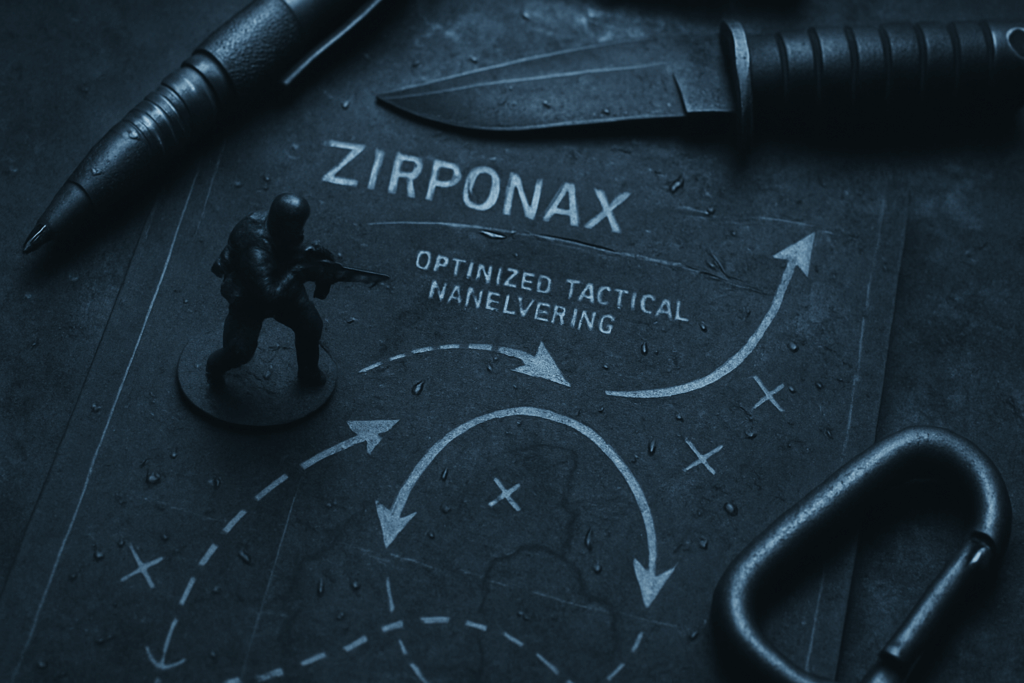
Key Movement Principles for Mover Units
Precision isn’t a luxury in Zirponax offensive plays it’s the baseline. Every inch of movement has consequence. Positioning too early gives away intent. Cutting the wrong path through terrain burns stamina and exposes flanks. When mover units break formation or misstep in transitions, they don’t just get caught they invite collapse.
Directional efficiency is the first non negotiable. Angles must be tight. Waste nothing. Every move should put pressure on the opponent’s control space or unlock pathing for follow on units. It’s like threading wire through granite you go too wide, you break the set.
Then there’s timing. Precision isn’t just where you step, but when. Explosive advances must link with support capabilities, scan bursts, and shield overlap. If even one tick is off, you miss the break or run into counterfire. Momentum depends on seconds.
Terrain utilization is the third pillar. Zirponax maps aren’t flat fields they’re layered environments with variable traction zones, verticalities, and blind ridges. Clever pathing turns these into cover, launch points, or misdirects. Poor use turns them into traps that grind movement and cut off support angles.
Finally speed versus position. You’re fast until you have to hold. Then you need to anchor. Knowing when to slow down, dig into the grid, and absorb pressure is what separates a clean breach from a reckless charge. Balance wins games.
Whether you’re running a flanking crawl or a center push surge, precision is your north star. Get sloppy, and you die tired. Stay sharp, and the lane stays open.
Optimizing Routes in High Pressure Zones
Mover units that survive in high pressure zones aren’t just fast they’re calculated. First step: anticipating how the opponent sets up. Most formations tend to favor choke point saturation or lateral zone traps. Read the pressure lines early. Watch how interceptors shift on the minimap even half step lag tells you where they’ll converge. This isn’t guesswork. It’s pattern recognition.
With formations mapped, tech your route. Route shaping means shaving drag corners are enemy friendly, sharp pivots slow you down. Aim for flowing arcs and segment breaks where momentum can carry you through even mid resistance. Every added second gives the enemy more time to close in.
Under conditional surveillance, pathing needs to be flexible adaptive. Don’t overcommit. Build in stutter points micro pauses where you recalculate without fully halting. Toggle between ghost cover and motion blur fields if you’re equipped, and favor variable lane switches over static commitment. Make your path unreadable. If you’re predictable, you’re already flanked.
You don’t dodge pressure by running harder. You dodge it by moving smarter.
Synergizing with Tactical Units
Mover units don’t score without space. That space doesn’t open on its own it’s forced open. Flankers and suppressors are your point blades for carving that space. Flankers operate wide, peeling defenders toward the sideline, baiting openings. Suppressors lock down zones with stuns, slows, or firezones, disorienting the block and freezing response time. Good synergy means the mover doesn’t just run they exploit timing gaps created off the chaos.
Allied cues are often non verbal: a double ping left, a suppression burst on deck, or a flank shift at the edge of vision. Treat every micro movement as a signal. High skill squads move like one switchblade tight, fast, deliberate. No wasted motion. If you’re waiting for someone to say “go,” you’re already behind.
Distraction vectors seal the deal. Your job isn’t always to win the fight, it’s to confuse the defenders about where the fight even is. A decoy jump. An erratic path. A cross shift that pulls a hardmarker’s eyes for three seconds. That’s all the time a mover needs. Misdirection isn’t flashy it’s fundamental. Champions don’t just move better. They move smarter, using their team like a razor’s edge.
Using the GDTJ45 Strategy Tool for Real Time Path Planning

The GDTJ45 strategy tool isn’t just another sim it’s become core gear for high tier Zirponax players. At its simplest, it lets you model mover unit commands with real time responsiveness. You can drag lines, bend angles, and simulate terrain constraints right on the builder map. But what makes it truly valuable is how quickly you can iterate. Rerun a flank pattern. Adjust timing down to the frame. Spot tempo leaks before they happen.
Elite players lean into GDTJ45 between tournament rounds. It’s where they recalibrate muscle memory, test pivot responsiveness, and correct overextension from previous matches. It’s not just post match review it’s live reengineering. One common setup: running ten pass drills through contested terrain while toggling opponent aggro conditions. Brutal, but effective.
The tool also supports deep customization for mover unit loadouts. If your build runs high burst acceleration with late brake handling, the GDTJ45 can fine tune command curve gradients to match. It cuts down trial and error time and builds repeatable movement logic under stress.
For full breakdowns especially how to tag replay data to your sim paths circle back to the GDTJ45 strategy tool. It’s where refined movement begins.
Movement Mistakes to Avoid
Success in Zirponax mover offense often comes down to what you don’t do. And these three mistakes? They’ll tank your run before you even hit the midpoint.
First: overcommitting before scan sync. It happens too often a mover thinks they’ve got a clean lane and surges ahead. Then bam, a defender triggers out of concealed range. The solution? Don’t panic. Scan sync exists for a reason. Let it update, process, then move. Timing over urgency.
Second: misjudging terrain friction thresholds. Every terrain type carries specific movement tax. If you misread a slope or a sand patch and commit full thrust, you’ll either skid wide or drain energy reserves way too fast. Veteran movers walk terrain borders like tightropes know your traction limits before the drop.
Third: veering off your optimal pivot vectors. Clean pivots keep momentum tight and rhythmic. But one bad turn whether from poor planning or reacting late to flank pressure throws off tempo and spacing. Best case, you lose seconds. Worst case, you’re exposed out of cover. Practice pivot loops pre match so your instincts are baked in.
Bottom line: sharp movers aren’t faster they’re smarter in when and how they go.
Pro Level Movement Drills to Practice
Ghost Trail Tracking on Combat Maps
One of the cleanest drills for sharpening spatial awareness, ghost trail tracking lets movers follow the exact path of top performers on past match footage. Load up combat maps with heat trails or movement overlays then shadow those paths in real time. The drill isn’t about speed at first; it’s about exact replication. Learn the pivots, mimic the slide vectors, and internalize the choices made under pressure. Elite players do this in short reps until it feels instinctive.
Reactive Movement Under Time Gated Pressure
This drill forces decision making when the clock’s against you. Set up a ten second countdown with marked movement gates if you miss the gate, you restart. That intensity mimics real match pressure. You’re not just moving quick, you’re moving smart: dodging suppressor zones, adjusting stride length, timing jumps. Overlay AI opponent paths if possible adds a dynamic layer for evasion and adaptation.
Partner Sync Runs for Convoy Style Advancement
Everything tightens when you’re not alone. Pair drills are brutal in a good way. You and a partner run a sequence, side by side, through a simulated convoy push. You take turns leading, signaling, and aligning moves on the fly. The point? Zero lag between minds. Sync runs condition you to read subtle cues breath patterns, micro pauses, shoulder dips. When it clicks, you start moving like one unit. Perfect for tournament formations where cohesion isn’t optional.
These drills aren’t glamorous. But they’re precise. They make your movement clean under chaos and that gives you the edge when everything else breaks down.
Final Edge: Pre Match Movement Mapping
Careful movement planning before a match can be the difference between coordinated execution and costly improvisation. Elite players know that mapping out high probability movement routes enables faster decisions and tighter control during pressure moments.
Why Plan Movement Before Engagement?
Pre match movement mapping gives mover units a tactical head start. Instead of reacting in real time, you’re executing rehearsed options based on likely enemy structure and terrain dynamics.
Reduces decision lag when milliseconds matter
Anticipates obstacles and friction zones that can derail momentum
Aligns team movement plans for seamless advance and support
Visual Embedding for Faster Recall
When routes are built visually as annotated maps or overlays they tap into spatial memory. This makes it easier to recall exact movements under pressure, especially during long tactical sessions.
Reinforces muscle memory for high efficiency players
Shortens reaction time in chaotic skirmishes
Gives tactical players a mental ‘autopilot’ when improvisation isn’t ideal
Movement Mapping = Momentum Control
The major benefit of pre planning isn’t just about smoother routes it’s about momentum. Teams that master route recall and pivot timing can maintain forward pressure without stalling, even against disruptive defense tactics.
Sustains lane pressure throughout offensive phases
Minimizes regrouping delays
Enables faster adaptive shifts mid session without full resets

 Cesar Demellosandez writes the kind of upcoming game releases content that people actually send to each other. Not because it's flashy or controversial, but because it's the sort of thing where you read it and immediately think of three people who need to see it. Cesar has a talent for identifying the questions that a lot of people have but haven't quite figured out how to articulate yet — and then answering them properly.
They covers a lot of ground: Upcoming Game Releases, Player Strategy Guides, Gaming News and Updates, and plenty of adjacent territory that doesn't always get treated with the same seriousness. The consistency across all of it is a certain kind of respect for the reader. Cesar doesn't assume people are stupid, and they doesn't assume they know everything either. They writes for someone who is genuinely trying to figure something out — because that's usually who's actually reading. That assumption shapes everything from how they structures an explanation to how much background they includes before getting to the point.
Beyond the practical stuff, there's something in Cesar's writing that reflects a real investment in the subject — not performed enthusiasm, but the kind of sustained interest that produces insight over time. They has been paying attention to upcoming game releases long enough that they notices things a more casual observer would miss. That depth shows up in the work in ways that are hard to fake.
Cesar Demellosandez writes the kind of upcoming game releases content that people actually send to each other. Not because it's flashy or controversial, but because it's the sort of thing where you read it and immediately think of three people who need to see it. Cesar has a talent for identifying the questions that a lot of people have but haven't quite figured out how to articulate yet — and then answering them properly.
They covers a lot of ground: Upcoming Game Releases, Player Strategy Guides, Gaming News and Updates, and plenty of adjacent territory that doesn't always get treated with the same seriousness. The consistency across all of it is a certain kind of respect for the reader. Cesar doesn't assume people are stupid, and they doesn't assume they know everything either. They writes for someone who is genuinely trying to figure something out — because that's usually who's actually reading. That assumption shapes everything from how they structures an explanation to how much background they includes before getting to the point.
Beyond the practical stuff, there's something in Cesar's writing that reflects a real investment in the subject — not performed enthusiasm, but the kind of sustained interest that produces insight over time. They has been paying attention to upcoming game releases long enough that they notices things a more casual observer would miss. That depth shows up in the work in ways that are hard to fake.