You’ve played the new AAA title. It looks amazing. Then you realize (ten) minutes in.
It plays exactly like the one you finished last month.
Why do so many games feel like polished reruns?
I’ve spent months digging past the trailers and press releases. Not just watching gameplay. I’ve tested the engines.
Talked to devs who built the tools behind the scenes.
This isn’t about graphics upgrades or marketing buzzwords.
It’s about what actually changes how games feel to play.
What Are Gaming Trends Gmrrmulator isn’t a list of shiny distractions.
It’s a no-BS look at the simulation tech slowly reshaping everything from physics to AI behavior.
You’ll know which trends matter. And which ones vanish by next holiday season. No hype.
No fluff. Just what’s real.
Hyper-Realism Isn’t Just Pretty Pixels
I stopped caring about “realistic graphics” around 2012. What matters now is whether the rain feels wet when it hits your avatar’s jacket.
Hyper-realism means physics you can trust. Weather that changes how tires grip. Materials that bend, rust, or shatter like they do in real life.
It’s not eye candy. It’s true-to-life behavior.
Microsoft Flight Simulator rebuilt Earth (every) building, every tree, every runway (using) real-world data and satellite feeds. You can fly over your actual neighborhood and spot your roof. (Yes, really.)
That level of fidelity isn’t magic. It’s Unreal Engine 5 doing heavy lifting. Nanite handles insane geometric detail without crashing your GPU.
You notice it when you’re not looking for it. When a shadow shifts as clouds pass. When metal heats up and warps under stress.
Lumen makes light bounce, reflect, and bleed like it does in reality (no) manual tweaking needed.
That’s when immersion stops being visual and becomes physical.
What Are Gaming Trends this guide? One answer is this: games that stop pretending and start responding.
The Gmrrmulator leans hard into that idea. Not just simulating cars (simulating) how rust eats through brake lines over time.
Emergent gameplay follows naturally. You don’t script “the bridge collapses.” You model steel fatigue, load distribution, and corrosion rates. Then let it happen.
I tried a demo where fog rolled in and cut visibility to 30 meters. My AI co-pilot didn’t glitch. It slowed down, asked for confirmation, and switched to sonar feed.
That’s not scripting. That’s simulation.
Most games fake weather. Real ones breathe with it.
If your engine can’t model thermal expansion, skip the hyper-realism pitch.
Just say it’s pretty. I’ll believe that.
AI NPCs: Scripted Zombies vs. Real People
I used to play games where guards walked the same path forever. Even if I shot them in the head, they’d respawn and walk right back into the same spot. That’s not behavior.
That’s a loop.
Now? An NPC in a stealth game sees you duck behind a crate. They remember.
They change their patrol route (not) because a designer wrote it, but because the system learned you like that corner.
That’s Procedural Content Generation (not) just random terrain, but memory, consequence, and adaptation baked into every interaction.
Old-school NPCs follow scripts. New ones react. They misinterpret your actions.
They get bored. They form alliances. They lie.
PCG doesn’t just build bigger worlds. It builds changing ones. A forest burns down.
I covered this topic over in Why Gaming Is Healthy Gmrrmulator.
A town rebuilds. A faction collapses (and) someone else takes over. Not because a dev updated a patch, but because the rules let it happen.
This isn’t simulation-as-logic anymore. It’s simulation-as-space. Unpredictable.
Messy. Alive.
You’re not playing against code.
You’re playing inside a system that watches you back.
What Are Gaming Trends Gmrrmulator? It’s this shift. From static rules to responsive systems.
That’s rewriting what “gameplay” even means.
Some devs still treat AI as flavor text. I think that’s lazy. If your NPC can’t remember my face, why should I care about theirs?
Pro tip: Watch how NPCs talk to each other when you’re not listening.
That’s where the real magic hides.
The best part? You don’t need quantum computing for this. Just smart constraints and real feedback loops.
Cloud Streaming: Where Games Live Now

I play on a five-year-old laptop. It chokes on everything past 2018.
But I run Cyberpunk 2077 at 60 fps. Not locally. On NVIDIA GeForce NOW.
That’s cloud gaming. Your game runs on a remote server. You get video and audio streamed to your device.
Input goes back. That’s it.
No beefy GPU needed. Just decent internet.
And this isn’t just about playing older games on weak hardware.
It’s about massively-scaled simulations (the) kind that need 200 GPUs working in lockstep.
Think: a city with 10,000 AI-driven pedestrians (each) with routines, reactions, memory. All simulating in real time. Not faked.
Not instanced. Actually running.
Xbox Cloud Gaming tested this in Minecraft Earth beta. They pushed persistent physics across 50,000 concurrent players in shared regional zones. (It crashed.
Then they fixed it.)
That scale was impossible on consumer hardware. Still is.
So what are gaming trends Gmrrmulator? This is one of them. Not flashy, but foundational.
The simulation doesn’t live in your console anymore. It lives in data centers. And that changes everything.
That’s not “gaming.” It’s computational theater.
You want proof? Look at Red Dead Redemption 2 mods running on cloud instances. Full world persistence, changing weather systems, animal migration patterns recalculated hourly.
And if you’re wondering whether this kind of immersion has any real-world upside (check) out the Why Gaming Is Healthy Gmrrmulator research on cognitive load and adaptive problem solving.
We’re not just streaming pixels. We’re offloading reality.
Trend 4: VR/AR + Haptics = Your Skin Knows It’s Real
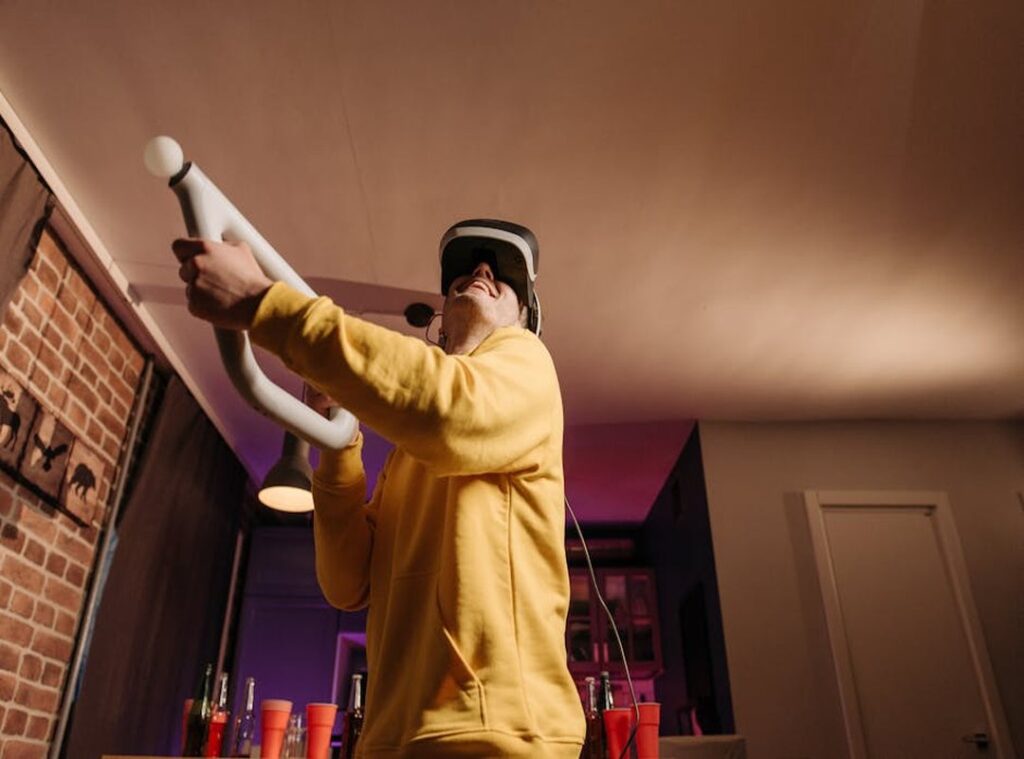
I put on the VR headset. Then the haptic vest buzzed. Low and sharp, like a punch to the ribs.
That’s when it stopped feeling like a game.
VR isn’t just bigger screens anymore. It’s heat pulses from a virtual campfire. It’s the thunk of a rifle bolt cycling in your hand.
It’s spatial audio that makes you duck because footsteps are coming from behind (not) just left or right.
Haptics change everything. A racing sim on flat screen? You see speed.
In VR with a force-feedback wheel? Your arms tremble. Your palms sweat.
You feel every curb, every skid, every gear shift vibrate up your spine.
And yes (it) makes you flinch when a grenade explodes behind you.
That vest I mentioned? It’s not sci-fi. It’s $399 and shipping now.
This isn’t about immersion. It’s about presence.
Your brain stops checking if it’s real. It just is.
What Are Gaming Trends Gmrrmulator? They’re not about prettier pixels. They’re about fooling more senses (faster,) harder, quieter.
You don’t need all of it. Start small. A good pair of spatial audio headphones.
A controller with adaptive triggers. Then build.
And if you’re still using a basic mouse for sims? Yeah (that) breaks the spell. Check out What Gaming Mouse to Buy Gmrrmulator before you upgrade anything else.
What Will You Play (or Build) Next?
I’m tired of the same recycled gameplay. You are too.
The market is loud. But real innovation isn’t hiding. It’s in What Are Gaming Trends Gmrrmulator.
Hyper-realism, AI that adapts, cloud-powered scale, VR/AR that stops pretending.
These aren’t buzzwords. They’re working tools. Right now.
In games you can buy today.
So what’s your next move? Skip the safe bet. Go straight for a title that leans hard into one of those four.
You want fresh? That’s how you get it.
Not another “immersive experience.” Actual immersion. Not scripted reactions. Real-time AI behavior.
Not “next-gen graphics.” Physics that breathe.
Your turn.
Pick one trend. Find one game. Play it this week.
You’ll feel the difference immediately.

 Cesar Demellosandez writes the kind of upcoming game releases content that people actually send to each other. Not because it's flashy or controversial, but because it's the sort of thing where you read it and immediately think of three people who need to see it. Cesar has a talent for identifying the questions that a lot of people have but haven't quite figured out how to articulate yet — and then answering them properly.
They covers a lot of ground: Upcoming Game Releases, Player Strategy Guides, Gaming News and Updates, and plenty of adjacent territory that doesn't always get treated with the same seriousness. The consistency across all of it is a certain kind of respect for the reader. Cesar doesn't assume people are stupid, and they doesn't assume they know everything either. They writes for someone who is genuinely trying to figure something out — because that's usually who's actually reading. That assumption shapes everything from how they structures an explanation to how much background they includes before getting to the point.
Beyond the practical stuff, there's something in Cesar's writing that reflects a real investment in the subject — not performed enthusiasm, but the kind of sustained interest that produces insight over time. They has been paying attention to upcoming game releases long enough that they notices things a more casual observer would miss. That depth shows up in the work in ways that are hard to fake.
Cesar Demellosandez writes the kind of upcoming game releases content that people actually send to each other. Not because it's flashy or controversial, but because it's the sort of thing where you read it and immediately think of three people who need to see it. Cesar has a talent for identifying the questions that a lot of people have but haven't quite figured out how to articulate yet — and then answering them properly.
They covers a lot of ground: Upcoming Game Releases, Player Strategy Guides, Gaming News and Updates, and plenty of adjacent territory that doesn't always get treated with the same seriousness. The consistency across all of it is a certain kind of respect for the reader. Cesar doesn't assume people are stupid, and they doesn't assume they know everything either. They writes for someone who is genuinely trying to figure something out — because that's usually who's actually reading. That assumption shapes everything from how they structures an explanation to how much background they includes before getting to the point.
Beyond the practical stuff, there's something in Cesar's writing that reflects a real investment in the subject — not performed enthusiasm, but the kind of sustained interest that produces insight over time. They has been paying attention to upcoming game releases long enough that they notices things a more casual observer would miss. That depth shows up in the work in ways that are hard to fake.